|
:: Wind Energy International 2011/2012 - Germany
The German electricity sector was liberalised in 1998 with a new energy law (Energiewirtschaftsgesetz, EnWG). The German regulation authority for the energy market is the so called Bundesnetzagentur. lt is supposed to guarantee competition in the electricity and gas supply markets. Since the late nineties, a number of additional regulations have come into force to stimulate competition. The electricity market is divided into the areas of production, transmission and distribution.
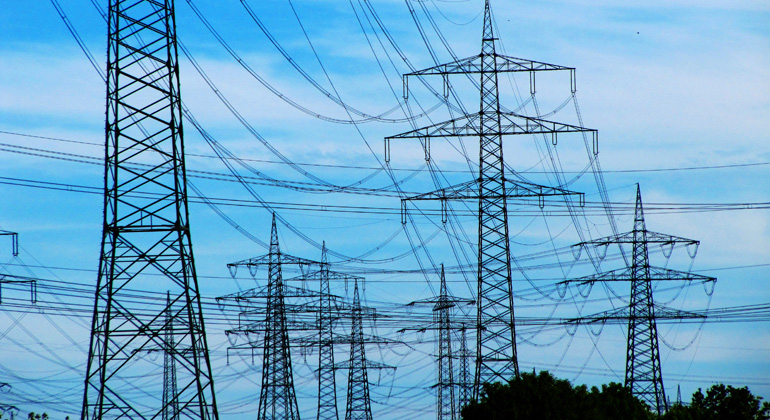
Four large energy companies - E.ON, RWE, Vattenfall Europe and EnBW - dominate the German electricity market. They own over 80 % of the power generating capacity in Germany. Their respective (formally separated) grid operation companies operate the German transmission grid. Access to the grid for third parties is guaranteed by law. In practice, however, grid capacity in a number of regions is limited and expansion is a protracted process.
Â
Wind Energy Sector Overview
Installed capacity of wind energy (end of 2010): 27215 MW
21'607 wind turbines with a total capacity of 27215MW were installed in Germany by the end of 2010. 754 new wind turbines with a total capacity of 1'551 MW were installed in 2010, of which 183 MW repowering and 108 MW offshore turbines. This is almost 400 MW less than in 2009 (1'916 MW). 37,5 TWh of wind electricity was generated in 2010. The contribution of wind energy to Germany's electricity net consumption is now at 6,2%.
Â
National targets: In 2008 the European Council and European Parliament decided an a new overall binding target of 20 % renewable energy share in EU final energy demand until 2020. The official share for Germany will be an increase up to 18 % of renewable energy share in the energy mix by 2020). As mentioned in the German Energy Concept for an Environmentally Sound, Reliable and Affordable Energy Supply from autumn 2010, by 2020 electricity generated from renewable energy sources is to account for 35 % of gross electricity consumption. Accordingly the German government will seek to increase the proportion of gross electricity consumption contributed by electricity from renewable energy sources to: 50 % by 2030, 65 % by 2040 and 80 % by 2050. The German Renewable Energy Federation (BEE) has published a prognosis for a share of 47 % under positive framework conditions. Wind energy will deliver a very important contribution: According to the estimates of the German Wind Energy Association (BWE) wind could deliver up to 150 TWh per year, which would be a share of 20-25 % of German electricity demand by 2020.
Â
Market Shares of Wind Turbine Manufacturers in 2010
While there is currently a decreasing tendency in the German market, exports from manufacturers and suppliers in 2010 were still strong. lt is also expected that the industry will benefit from the developing offshore business. The market leading manufacturers in Germany are Enercon and Vestas, with a growing share of REpower (see chart).
Â
Wind Energy Resource Information
Wind atlases are available at national and at regional levels. A good overview can be gained e.g. with the Renewable Energy Information System (REISI) which is connected to IWES Kassel. Information and measurement data are available conceming wind conditions in Germany and on operational results (website see below).
Â
Wind Energy Legislation
In January 2009, an amended version of the Renewable Energy Sources Act (ErneuerbareÂEnergien-Gesetz / EEG) entered into force. Since 2000, electricity produced from renewable energy sources is given priority for grid connection, grid access in both distribution and transmission grids, and power dispatch under the EEG. This regulation stipulates a fixed feed-in tariff for each kWh of power produced and fed into the grid from renewable sources. The EEG 2009 for wind energy includes higher tariffs for on- and offshore installations, incentives and regulations for improved grid integration technology of turbines as well as stricter obligations for grid operators when it comes to integrating wind power.
Â
Currently, the compensation rates for newly installed wind turbines are subject to a nominal annual degression of 1 % (onshore). Degression for the offshore tariff is set at 5 %, but only starting from 2015.
Â
There is currently an amendment taking place of the EEG as declared by the liberal-conservative government coalition. The new EEG will come into force by 2012.
Â
As a second very important law for the wind energy development in Germany the German Energy Act (Energiewirtschaftsgesetz/EnWG) will be amended in 2011 as well. The EnWG aims at ensuring a safe, costÂeffective, consumer-friendly, efficient and environmentally-friendly supply of power and gas as well as efficient and unrestricted competition and the safeguarding of an effective and reliable operation of power grids. lt therefore plays a very important role for the development of wind energy in Germany.
Â
An important regulation is also the German Federal Building Code that treats wind energy plants as privileged projects. Local authorities are supposed to designate specific priority zones for wind energy utilisation. This means that they can also restrict building to specific areas. lt is the third regulation that will be amended in 2011. Hence the year 2011 and the political decision within will be crucial for the wind energy sector in Germany.
In addition to the regulations mentioned above, a number of Federal States have issued recommendations concerning distance of new turbines to settlements and concerning height restrictions. General distance recommendations and height restrictions are a barrier to exploiting the optimum potential from wind energy.
Â
Wind Energy Projects
Operating
27'215 MW of wind energy capacity had been installed in Germany by the end of 2010. The projects are located in the North of Germany and in the coastal areas but also in inland zones. Wind energy utilisation is also possible in various locations in the South of the country, especially in mountainous regions. However, these zones are often restricted for reasons of landscape protection. An overview on the distribution of projects can be found on the website of the Renewable Energy Information System (REISI; website see below).
Â
Planned
BWE sees a potential of 45'000 MW wind capacity onshore and an electricity generation of about 110 billion kWh/a by 2020. In addition, 10'000 MW should be installed offshore by that period. Then, the total output from wind electricity will add up to 150 TWh/a.
Â
In 2009, the first offshore pilot project, the test site "Alpha Ventus" with 60 MW in the North Sea start operating. In 2010, 108 MW offshore turbines were installed in the German parts of the North Sea and the Baltic Sea. Most German offshore parks will be erected up to 20-60 km away from the coastline in 20-40 m water depth. Thus far, the national maritime authority and the Federal States have licensed 26 projects, adding up to an overall capacity of currently over 6'500 MW. The costs for connecting offshore wind farms to the mainland grid are taken over by transmission systems operators (TSOs). TSOs therefore have started to plan connection lines for clusters of projects at Sea. Up to now only 3 connections (400 MW HVDC light) have been installed.
Â
With the new offshore-tariffs in place the government wants to compensate for increasing building and Operation cost as well as high risk expectations by investors, banks and insurance companies, at least conceming bigger projects in the North Sea. Different to the German onshore market, the offshore market is dominated by bigger players from side of the energy utilities as investors.
Â
References
- German Wind Energy Association (BWE)
- German Renewable Energy Federation (BEE)
- Overview on policies and support programmes of the Ministry of Environment and various information on RE in Germany under www.erneuerbare-energien.de, also version of the Renewable Energy Sources Act (EEG) in several languages.
- Energy data in general can be obtained from the Ministry of Economics: www.bmwi.de; there is also a website on renewable technology for export from BMWI: www.german-renewableÂenergy.com
- Renewable Energy Information System — REISI
- German Wind Energy Institute (DEWI)
- Feed-in cooperation (with German participation and more information on feed-in systems)
World Wind Energy Association | Georg Schroth 2011
Georg Schroth | Policy Director
German Wind Energy Association (BWE) Berlin, Germany
Â
|