
Are petrol prices more important than 16,300 heat-related deaths?
The Robert Koch Institute estimates that in the summer of 2026, around 16,300 people in Germany died as a result of the heat. The federal government under Chancellor Friedrich Merz has remained silent on the matter. Petrol prices, on the other hand, are all the more important to it, with statements and reports on the subject issued almost daily.
It is only logical that such a federal government is unpopular with voters. Wouldn’t it be more helpful and convincing to support people rather than petrol? Even the first petrol discount a few weeks ago cost the federal government around two billion euros and provided hardly any relief.
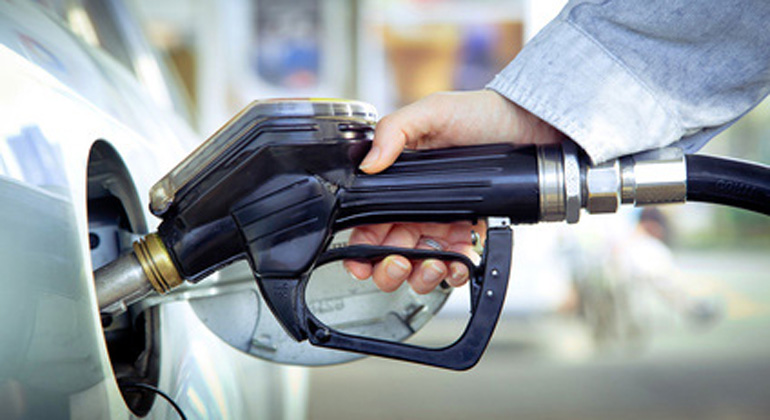
The second fuel discount now announced is set to cost the federal and state governments – in other words, the taxpayers – around 2.5 billion euros. And it will cause further harm. This is because low-income commuters who drive small cars to work save less than the wealthier, who can afford large cars that consume a lot of fuel due to their high engine capacity and have the greatest impact on the environment. What a paradox in these times of rising temperatures and climate change!
The tax money for petrol has to be raised by all taxpayers, including those who do not drive. It is simply unfair that it is then mainly frequent drivers and the wealthier, with their large cars, who benefit. Those who do not drive get nothing.
An affordable ‘Deutschland-Ticket’ for nine euros, for example, would benefit everyone. We must break free from the oil price crisis and our dependence on combustion-engine cars. Every kilometre travelled without using petrol makes us more independent and freer. The federal government, too, must realise that the fossil fuel era is coming to an end. There is no point in continuing to subsidise a technology on the way out at everyone’s expense. Otherwise, Germany will remain in a downward spiral forever.
The reasons for this: After the Second World War, our country was decentralised for the sake of the car: millions of Germans worked – and still work – in the cities, but lived – and still live – in the countryside, and needed – and still need – cars – right up to the present day. Thus, cheap fuel became the ‘opium’ for the motoring public. For this was the only way to bridge the gap between where people lived, worked and spent their lives.
But today, to halt climate change, we need a policy of short journeys, a rapid expansion of local public transport and a swifter transition to electric cars, as well as more cycle paths and footpaths. Yet the next fuel rebate currently being planned by the federal government represents a step backwards rather than progress towards this goal. A fuel rebate is ecological madness and economic nonsense. This is also the view of Veronika Grimm, an economic adviser to the federal government. She considers the next fuel rebate to be ‘cynical’.
A society that, like Donald Trump, continues to rely on cheap petrol is destroying itself. Only by subsidising and promoting the move away from fossil fuels – that is, renewable energies – can we find a real way out of the crisis.
Once again, and let me be clear: as long as petrol prices are more important to the federal government than 16,300 heat-related deaths, it has still not grasped the greatest challenge of our time and will continue to lose voters.
How many more times do Friedrich Merz and his coalition partners intend to repeat the same old mistakes? As the latest election results show, they are increasingly losing the political centre ground.