China’s dual strategy: renewables plus coal
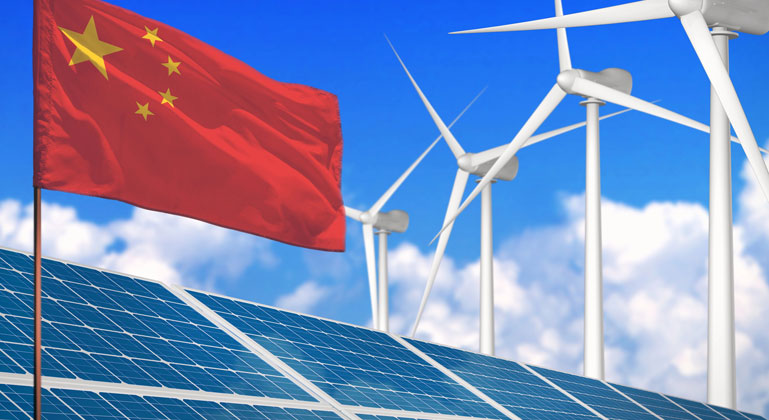
China, with its population of 1.4 billion, is expanding its renewable energies at a pace that is unmatched anywhere else in the world. By 2024, the country will have installed twice as many solar panels and wind turbines as the rest of the world combined.
And in the first half of 2025, China will have commissioned as much renewable energy as Germany and the UK consume in total.
However, this is only one side of China’s energy policy. The other side: The Center for Research on Energy and Clean Air (Crea) has calculated that China will have built coal-fired power plants with a total capacity of 21 gigawatts in the first half of 2025. This is the highest level in ten years. This means that China is still the world’s largest CO2 polluter.
Chinese economists at Crea explain this ambivalent result by saying that the country needs energy security for those times when the sun is not shining and the wind is not blowing. The Taz newspaper wrote on August 26, 2025: “This has been a recurring theme in recent years: Beijing takes two steps forward – only to take one step back.” An ambivalent model.
As elsewhere, China lacks power lines and storage facilities—in other words, the infrastructure to transport electricity from a region with excess capacity to a neighboring province with insufficient power production. The Chinese power grid is indeed outdated and is only gradually being renewed.
Nevertheless, China is serious about its climate goals. Far more serious than the US under Donald Trump. Chinese President Xi has declared the further expansion of renewable energies a top priority, while Trump is simultaneously slowing down renewables and focusing exclusively on nuclear and fossil fuels. Xi promised that China would reach peak CO2 emissions in 2030. But greenhouse gases have been falling in the Middle Kingdom since March 2024.
China is under intense pressure to act, as the country is already brutally affected by climate change – similar to the US. In summer, droughts threaten crop yields. In southern China, once-in-a-century rainfall floods entire cities, while the entire north of China suffers from water shortages. The water shortage caused by glacier melt in the Himalayas threatens not only China and India, but also Bangladesh and other countries in Southeast Asia.
The difference: China is expanding renewable energies and thus taking climate change seriously, but Trump in the US believes he can combat climate change by simply denying it. Yet climate researchers around the world agree that climate change is a matter of survival for humanity.
Source
Franz Alt 2025 | Translated with www.DeepL.com/Translator