Microplastics in household dust
Microscopic particles of plastics and synthetic fibres of our home environment such as those found in upholstery fabrics, curtains, clothing, paints and packaging materials are present in house dust, a Dutch-German research team has concluded after analysing dust samples from 105 households in the Dutch city of Utrecht and its catchment area.
The scientists found unexpected, consistently high levels of micro- and nanoplastics regardless of urbanicity. They examined potential links to living conditions and behaviour, as well as seasonal factors. “We are all exposed to tiny plastic particles in our house dust,” explains microplastics expert Dr Barbara Scholz-Böttcher from the University of Oldenburg, who analysed 208 dust samples in the laboratories of the Institute for Chemistry and Biology of the Marine Environment (ICBM). “We spend an estimated 90 percent of our daily lives indoors. Yet many people are completely unaware of just how high their exposure is within their own four walls.” The study, led by epidemiologist Amanda Durkin from the University Medical Centre Utrecht, was conducted as part of the EU-funded AURORA Project and published in the Journal of Hazardous Materials Advances.
Little research has been done to date on micro- and nanoplastics in house dust and their potential consequences for humans. What is new about this study is the high number of households for which data was gathered. In addition, in most cases dust was collected and analysed a second time three months later. The analyses showed that on average 35 micrograms of tiny plastic particles settled from dust per square metre and per day, with that figure reaching more than 500 micrograms in some cases. That translates to almost 13 grams – or in some cases up to 200 grams – of micro- and nanoplastics per square metre of living space per year in household dust.
PET particles most prevalent in household dust
Scholz-Böttcher, an environmental chemist at the University of Oldenburg, and two colleagues detected seven of the nine types of polymers they were looking for in the samples. The most prevalent was polyethylene terephthalate – or PET for short – which is known as a common component of plastic bottles, but is also widely used in textile fibres and protective films. PET was found in 99.5 percent of all house dust samples and accounted for 80 percent of the total plastic mass detected. Polystyrene, which is primarily used in food packaging and sound and thermal insulation, was also present in almost all samples (98.5 percent), albeit in lower concentrations, while Polypropylene, another packaging material, was detected in just under 83 percent of the samples. The presence and concentration of polyvinyl chloride (PVC) particles could not be determined because cotton fibres and other factors skewed the results here.
“Every person is responsible for their own dust”
The scientists emphasise that the analysed particles originate primarily from indoor sources, as no associations were observed between microplastic levels and outdoor factors such as brake and tyre wear particles, which were also examined. “Microplastics are often seen as a distant environmental problem affecting the oceans, but our findings show that exposure is occurring much closer to home through the indoor dust that accumulates in the spaces where we live and work,” says lead author Amanda Durkin. The scientists underline in their article that special attention should be paid to the potential for microplastics to be inhaled. “Every person is responsible for their own dust and can influence it, on the one hand through their choice of materials such as textiles, and on the other hand through targeted filtration of indoor air, as already commonly practised by allergy sufferers”, says Scholz-Böttcher. A human being breathes in more than 10,000 litres of air per day, she adds.
Dust collected in petri dishes over four weeks
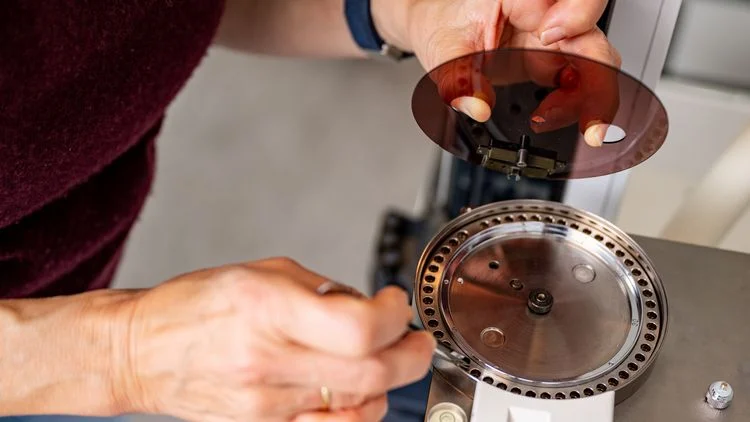
Already during the volunteer recruitment phase, Durkin’s team observed that people are interested in the topic of micro- and nanoplastics and their presence within the home, and that they are also a source of concern. The team’s call for volunteers met with a lively response, and the process turned out to be relatively straightforward. With a view to analysing the uptake of plastic particles into the body on the basis of blood and urine samples collected at a later point in time – and also assessing potential risks, for example during pregnancy – only women aged between 18 and 45 were recruited for the study. The 105 participants were instructed to place petri dishes with a twelve-centimetre diameter at locations at breathing height in their homes, for example on open shelves, sideboards or windowsills, and then left them there for four weeks. Samples of the settled dust were then collected and sent to the ICBM laboratory in Oldenburg, where they were purified and analysed in detail using a technique known as pyrolysis-gas chromatography-mass spectrometry. This is the first such large-scale study to systematically combine the passive collection of dust with this analytical method. The researchers in Utrecht also asked the participating women to complete questionnaires in order to establish links between their living situation and behaviour.
Surprise finding: better to vacuum less often?
The statistical analysis of the collected data revealed several trends: overall, concentrations of micro- and nanoplastics were higher in multi-person versus single-person households and lower with fewer persons per unit of living space. In addition, levels of plastic particles were found to be lower in summer than in autumn and winter, when people spent more time indoors and may have aired their homes less frequently. However, the analyses found no indication of a correlation between frequency of airing and levels of outdoor air pollution or concentration of plastics in the household dust.
On the other hand, having curtains tended to be associated with higher levels of plastic particles in house dust. The research team advises people who want to reduce these levels to have fewer synthetic fabrics, carpets and items of clothing in their home. However, further research will be needed to identify the most significant sources. Durkin and her team of researchers were surprised to find that, contrary to expectations, frequent vacuuming did not necessarily have a positive impact but actually caused an increase in the concentration of polycarbonates (PC) in household dust. At this point, the scientists can only speculate on the cause: existing particles may simply be stirred up during vacuuming, or they could be particles from wear and tear on the vacuum cleaner itself, or from floor coverings. Identifying the exact sources will require more detailed investigation, the scientists conclude.
Next step: analysis of blood samples
As a next step, the researchers plan to take a closer look at the specific consequences for humans, for whom a plastic-free living environment seems unthinkable at present. Scholz-Böttcher is expecting a delivery of selected, exemplary 40 denatured blood samples from participating households in Utrecht, which she will then test to determine whether any of the types of plastic found in the dust are also detectable in the blood of household members – and, if so, which. “To be honest, I’m extremely curious to see what we find,” says the microplastics expert. These findings are also significant in view of recent forecasts according to which global plastic use will triple by 2060 compared with 2019 levels.
- „Determinants and potential sources of micro- and nanoplastics in settled household dust: A repeated sampling study” by Amanda Durkin, Barbara M. Scholz-Böttcher, Lisa Charlotte Balding, Bente van Santbrink, Virissa Lenters, Runyu Zou, Ulrike Gehring & Roel Vermeulen