
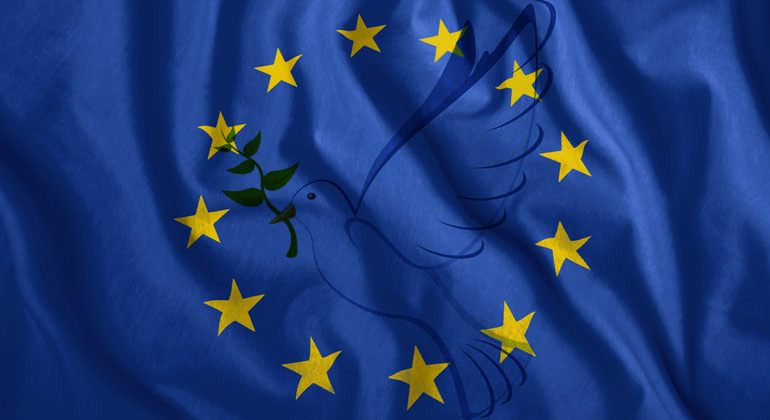
Europe is the solution, not the problem
Donald Trump had a wall built on the border with Mexico, AfD politicians have previously rambled on about orders to shoot at the borders, and Viktor Orbán has had fences erected once again. Walls, orders to shoot and fences: we’ve seen it all before.
This backward-looking politics should actually have been consigned to history once and for all after 1990, but it has made a resurgence among some die-hards and those stuck in the past.
Europe has won
But then came the 2023 elections in Poland, with the return of a pro-European Tusk government in Warsaw, and now a further democratic renaissance in Budapest. In Hungary, the centrist candidate, Peter Magyar, even secured a historic two-thirds majority against the right-wing populist Viktor Orban. As in Poland, the populists were voted out by the people in free elections in Hungary too.
The populists and the far right had declared Europe to be the problem. But the people have decided: Europe is not the problem; Europe is the solution. Voters are clearly able to distinguish between genuine representatives and outdated nationalist egoists. The people of Hungary have made it clear that they want to belong to a peaceful, democratic and environmentally friendly Europe. They have delivered a clear rejection of Trumpism, Putinism and Orbanism. But also, in Germany, of the AfD, and in France, of Le Pen’s voters.
And, just as the Poles did before them, they have shown Western Europeans that they share the same values as us. This also applies to the Czechs, Slovaks, Slovenians and Croats, to the Bulgarians and Romanians, to the three Baltic states of Estonia, Latvia and Lithuania, and to the Ukrainians. Europe continues to exert a powerful influence in both East and West. That is the historical message of many elections in Eastern Europe since 2004 and thereafter, following their accession to the EU. One may well suppress and deny the lessons of history for a time, but not forever.
The lesson: “Nationalism always means war”
This is how Winston Churchill put it in 1946, drawing on the lessons of two world wars, in his famous speech in Zurich. Since then, no EU country has ever launched a military attack on another EU country. Eighty years of peace and prosperity – what a historic achievement, what a fortunate development. And a model for the whole world, showing that peace is possible. Putin, Trump and Xi can learn from this that the strength of the law is more helpful than the law of the strongest.
The democratic and peaceful EU has become a place of longing for millions of people across the globe. I hear this today from East Asia through Africa to Latin America. Hungarian voters have shown that right-wing populists are oblivious to the future and obsessed with the past. Europe has a future if it does not forget its humanist and Christian roots: tolerance, freedom, peace, justice and democracy.
The EU remains a hopeful project for peace, born from the ruins and memories of the Second World War.