
The warning cry of a neglected conscience
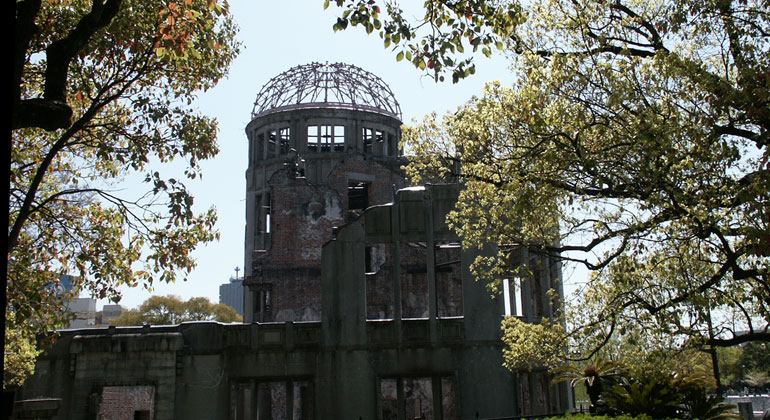
81 years ago, US soldiers dropped an atomic bomb on a populated area for the first time in human history. Their target on 6 August 1945, at 8.15 am, was the city of Hiroshima in southern Japan. Just three days later, the second atomic bomb was dropped on Nagasaki. On 6 August 1945, 140,000 people died in Hiroshima and, shortly afterwards, 73,000 in Nagasaki.
To this day, the US government justifies this brutal action by arguing that only through the use of the two atomic bombs could the Second World War in the Far East be brought to a swift end. Not only Japanese but also US historians dispute this claim, pointing out that the Japanese government had already been sending signals of peace and showing signs of ‘war weariness’.
By the year 2026, however, more than twice as many people had died from the long-term effects of nuclear radiation – over 400,000 in total. And the deaths continue to this day – 81 years after the atomic bombs were dropped.
Twenty years ago, the mayors of Hiroshima and Nagasaki invited me to give lectures. My topic was ‘From the Atomic Age to the Solar Age’. There are surely no more significant places to address this subject. I learnt during my visit that the majority of citizens in Japan, too, are opposed to both nuclear energy and atomic bombs.
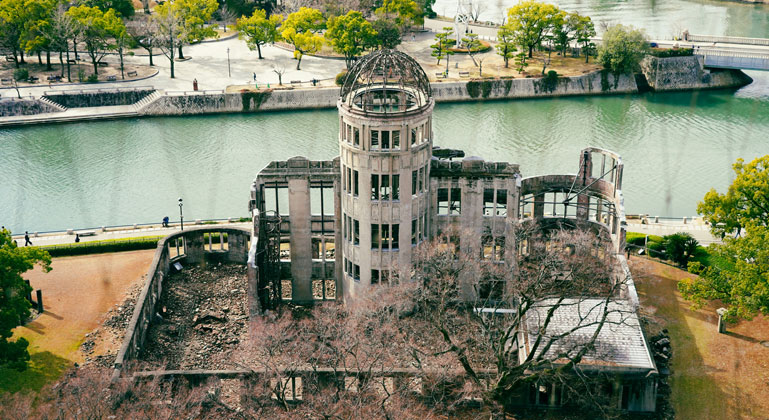
Anyone who speaks to radiation victims in Hiroshima and Nagasaki, or visits the two striking memorials, is confronted with a glimpse of hell on earth. In August 1945, a mass murder took place the likes of which the world could not have imagined until then. Within seconds, tens of thousands of people were reduced to nothing, left at best as a pile of ashes or irradiated and crippled for the rest of their lives.
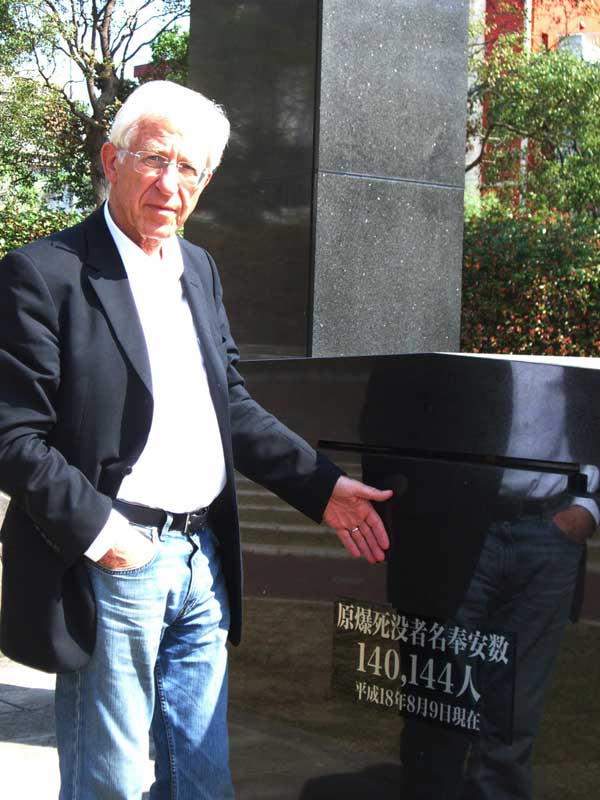
What shook me most, however, was a figure quoted by the Mayor of Hiroshima: even today, over 3,000 people in Japan die every year as a result of the atomic radiation from 1945. Shortly before my talk in Nagasaki, the deputy mayor slipped me a handwritten note on which he had written the current number of people in his city who have died to date as a result of atomic radiation: 140,144! (see attached photo)
81 years on, Hiroshima and Nagasaki are not behind us, but still lie ahead of us. People are still dying. Nuclear armament continues
We know, from years of debate surrounding North Korea’s and Iran’s nuclear programmes, of the close link between the so-called peaceful use of nuclear power and the construction of nuclear bombs. The material for the bomb is also produced in nuclear power stations. Without nuclear power stations, there would be no nuclear bombs – not even for Iran or North Korea. The global incidents at numerous nuclear facilities should give even the staunchest supporters of nuclear power pause for thought! However, as long as there are around 400 nuclear power stations operating worldwide, unscrupulous power-hungry politicians will continue to try to build nuclear bombs. 400 nuclear power stations mean 400 potential nuclear accidents. There is not a single nuclear power station in the world that is 100 per cent safe.
We must also expect that nuclear bombs will one day fall into the hands of terrorists if we do not leave the nuclear age behind us. But that means: closing all nuclear power stations as quickly as possible and generating energy in future from renewable sources – from solar, wind, bioenergy, geothermal, hydropower and marine energy. With the necessary political will, a 100 per cent solar energy transition is possible within 15 years.
The mayors of Hiroshima and Nagasaki vowed 40 years ago that the mass nuclear slaughter in their cities must never be forgotten or suppressed by humanity, and founded the global organisation ‘Mayors for Peace’, to which (as of July 2026) 8,584 mayors from 166 countries have joined – including the mayors of over 900 German towns and municipalities, from across the entire Baden region, such as Karlsruhe and Freiburg, Bruchsal and Bühl, Rastatt, Gernsbach, Heidelberg, Mannheim, Offenburg and Pforzheim, Karlsruhe and Baden-Baden, as well as Berlin, Munich, Hamburg and Cologne. According to a FORSA survey, 93 per cent of Germans are in favour of a ban on nuclear weapons under international law, and 85 per cent support the withdrawal of the 25 US nuclear weapons still stored on German soil.
The aim of ‘Mayors for Peace’, which now represents over 400 million people: a world free of nuclear weapons!
The former mayor of Hiroshima, Tatadoshi Akiba, is optimistic: “Since it was possible to abolish biological and chemical weapons worldwide, it is of course also possible to abolish the most dangerous weapons of all – nuclear weapons. No other city in the world should ever suffer the fate of Hiroshima or Nagasaki. To achieve this goal, however, many more towns and villages must join our alliance. Please help us with this in Germany too. For it is only by exerting significant pressure on the powerful national politicians of the nuclear-armed states that we can ensure the destruction of the more than 15,000 nuclear warheads currently in existence worldwide. These are enough to wipe out the entire human race at least 20 times over.” (More about the Mayors for Peace: www.mayorsforpeace.de). Kazumi Matsui, the current mayor of Hiroshima, is also the current president of Mayors for Peace.
“There is,” the deputy mayor of Nagasaki tells me as we part, “not the slightest justification for the nuclear hostage-taking of towns and villages. Never again must a city become the target of nuclear weapons.” The question crosses my mind: do we not owe this commitment to a nuclear-weapon-free world to our children and grandchildren as well?
Nuclear weapons are weapons of terror, 25 of which are still stored in Germany today – each with the destructive power of five Hiroshima bombs! It is surely the greatest and most dangerous illusion in human history to believe that we can secure lasting peace with nuclear weapons.
In 2007, the pilot of the bomber that dropped the bomb on Hiroshima, the US soldier Paul Tibbets, died. Shortly before his death, he said: “Yes, I would do it again. It never kept me awake at night.” To this day, no US president has apologised in Japan for the atomic bombs dropped on Hiroshima and Nagasaki or for the mass murder.
In 2019, the mayor of Fukushima invited me to give a talk to 400 Japanese mayors. My topic was – as it had been previously in Hiroshima and Nagasaki – ‘From the Atomic Age to the Solar Age’. During the talk, I asked the mayor of Fukushima, who had just returned from the damaged nuclear power station, what would happen if he were to enter the reactor core. His reply: ‘Within seconds, I’d be reduced to ashes’.
Wars are a crime against humanity
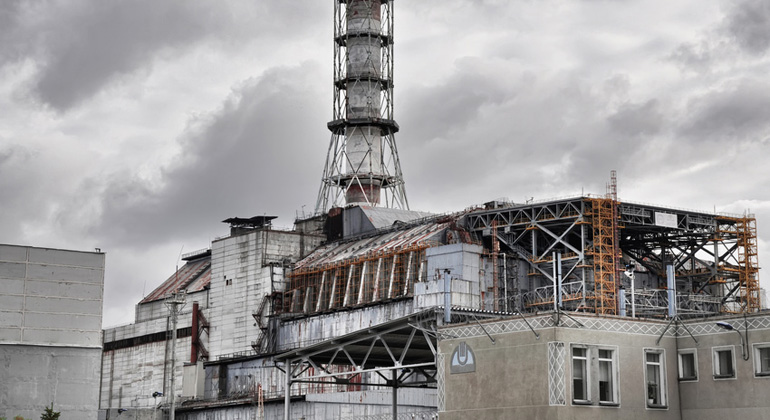
A nuclear war would probably be the last war, for afterwards there would likely be no people left who could wage another war. The warning cry of our conscience – which has so far been ignored – is this: do not forget the lessons of the four great nuclear disasters in Hiroshima, Nagasaki, Chernobyl and Fukushima.
The mayors of Hiroshima, Nagasaki and Fukushima told me that they cannot achieve a world free of nuclear weapons and a world without nuclear power stations on their own. To do so, they need the support of many colleagues around the world. After all, in 2019, 123 UN member states called for the abolition of all nuclear weapons. But all nine governments possessing nuclear weapons voted against it. Unfortunately, this included the German federal government at the UN. To date, the only person in Germany to have spoken out in favour of the withdrawal of US nuclear weapons from Germany whilst serving as a member of the government was the former FDP Foreign Minister, Guido Westerwelle, in 2012. It is likely that many more German mayors will have to campaign for this before the federal government in Berlin also comes out in favour of it. In doing so, Germany could demonstrate that it has genuinely learnt something from its history since 1945.
For 2,000 years, the ancient Roman principle ‘If you want peace, prepare for war’ has held sway. The result of this policy: 2,000 years of wars, mass murder and endless suffering. In light of these experiences, we must finally adopt this philosophy: ‘If you want peace, prepare for peace’. So, disarm rather than rearm – as the current federal government is doing by pouring ever more money into armaments, primarily to appease the US President. One would expect a CDU/CSU-led federal government to be guided more by the principles of the Sermon on the Mount than by the wishes of a dangerous US President who has lost all moral compass.
The US spends more than eight times as much on armaments and the military as Russia, and three times as much as China. Who is actually threatening whom here? With a tenth of global military spending, we could ensure that no child ever has to go hungry again. And with another tenth, we could ensure that all children can go to school. Wouldn’t these be more worthwhile goals than starting a new arms race, as the US, China and Russia – but also Germany – are currently doing once again? When will we finally learn that the purpose of our existence is not hatred and an arms race, but love and peace?
We must rethink peace and security, just as Jesus called for in the Sermon on the Mount.